

Oral Health as You Age
Simple, practical ways to care for your teeth, gums and smile
throughout your senior years.
A healthy smile matters at every stage of life. As we get older,
our mouths can change too, and our daily oral care routine may need
to change with them.
Teeth and gums may become more sensitive, the mouth may feel drier,
existing dental work may require closer attention, and tasks that
once felt simple, such as holding a toothbrush or cleaning between
the teeth, can sometimes become more difficult.
The good news is that getting older does not mean giving up on a
healthy smile. Small adjustments to your daily routine can make oral
care easier, more comfortable and more effective.
Why Oral Care Can Change as We Get Older
Ageing can bring changes throughout the body, and the mouth is no
exception. Some people notice increased sensitivity, gum changes,
dry mouth or difficulty performing detailed cleaning.
Many older adults also have fillings, crowns, bridges, implants or
other dental work that needs to be cleaned and monitored carefully.
Rather than simply brushing harder or spending more time cleaning,
effective senior oral care is about using the right technique and
adapting your routine to what your mouth needs now.
Brush Twice a Day for Two Minutes
Brush your teeth in the morning and again in the evening for at
least two minutes using fluoride toothpaste.
Fluoride helps strengthen the tooth surface and provides important
protection against tooth decay.
If your teeth are sensitive, ask your dentist whether a fluoride
toothpaste formulated for sensitivity may be appropriate for you.
Be Gentle With Your Teeth and Gums
Effective brushing does not require aggressive pressure.
Position your toothbrush at approximately a 45-degree angle towards
the gumline and use gentle pressure with short, controlled movements.
Work methodically around your mouth so that the inner, outer and
chewing surfaces are all cleaned.
Starting with the inside surfaces can be helpful because these areas
are often easier to overlook.
Let the Fluoride Keep Working
After brushing, spit out the excess toothpaste rather than rinsing
it immediately away with water.
Leaving a small amount of fluoride from the toothpaste on the teeth
gives it more opportunity to remain in contact with the tooth
surfaces after brushing.
Simple tip: Brush, spit, and avoid immediately
rinsing all of the toothpaste away.
Remember the Spaces Between Your Teeth
Your toothbrush cannot effectively clean every surface between
neighbouring teeth. This is why interdental cleaning is an important
part of a complete oral hygiene routine.
Depending on the size of the spaces between your teeth and your
individual needs, suitable options may include interdental brushes,
dental floss or other interdental cleaning aids.
Cleaning in front of a mirror with good lighting can make it easier
to see what you are doing, particularly around the back teeth.
If you are unsure which size or type of interdental cleaner is right
for you, your dental team can demonstrate suitable options and show
you how to use them safely.
Adapt Your Toothbrush if Your Mouth Feels Sensitive
If your teeth or gums have become more sensitive, a softer toothbrush
may feel more comfortable while still allowing effective cleaning.
This can also be helpful for some people experiencing dry mouth or
tenderness around the gums.
Brushing harder is not necessarily better. The goal is thorough,
gentle and consistent plaque removal.
Make Oral Care Easier if Dexterity Changes
Arthritis, reduced hand strength, limited movement or changes in
manual dexterity can make holding and controlling a toothbrush more
difficult.
If this happens, adapting the handle to make it larger and easier
to grip may help provide better control. Other toothbrush designs
may also be easier to hold and manoeuvre.
Oral care should not become a struggle. If brushing or interdental
cleaning is becoming difficult, let your dental team know. They may
be able to suggest a simpler technique or a more suitable cleaning
aid for your individual needs.
Pay Attention to Dry Mouth
A dry or uncomfortable mouth can make brushing and eating less
comfortable and may mean that your oral care routine needs to be
adjusted.
If your mouth regularly feels dry, tell your dentist rather than
simply accepting it as part of getting older.
Your dental team can assess your mouth, discuss your current oral
care routine and recommend an approach that is appropriate for your
circumstances.
Don't Forget Hard-to-Reach Areas
Certain areas of the mouth can be particularly difficult to clean,
including behind the back teeth, around the gumline and around
existing dental work.
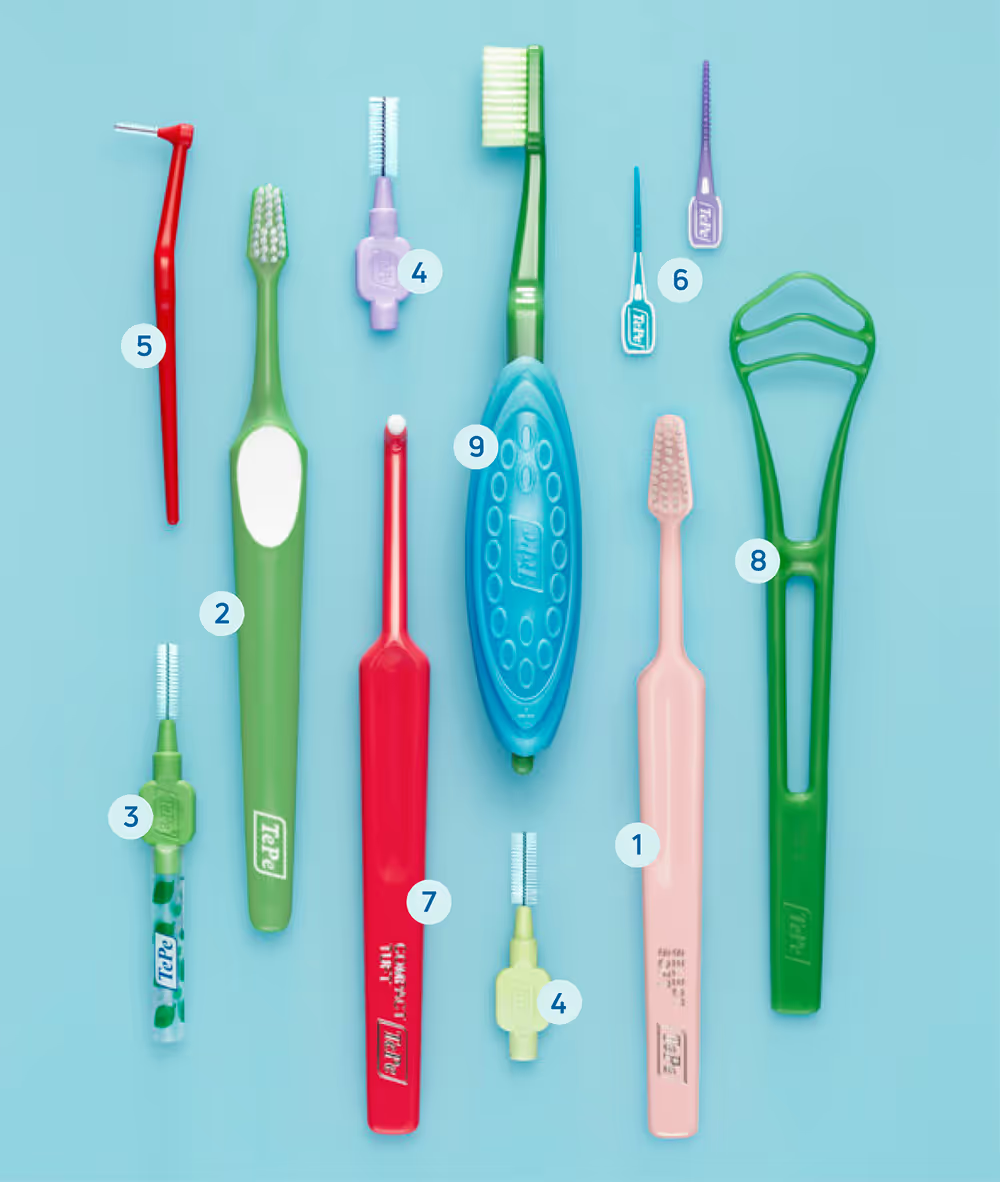
Smaller or more targeted cleaning aids may make these areas easier
to access.
The important thing is not to use as many products as possible.
It is to have a simple routine that allows you to clean the areas
of your mouth that need attention effectively and comfortably.
Changes in Your Mouth Shouldn't Be Ignored
Knowing what is normal for your mouth makes it easier to recognise when
something has changed.
Talk to your dentist if you notice:
- New or persistent tooth sensitivity
- Bleeding, tender or swollen gums
- Persistent dry mouth or oral discomfort
- Difficulty brushing or cleaning between your teeth
- Changes around existing dental work
- Difficulty chewing comfortably
- Any new change in your mouth that concerns you
These changes do not necessarily mean that something serious is wrong,
but they are worth discussing with your dental team so that the cause
can be assessed and your oral care routine adjusted where necessary.
Keep Your Daily Routine Simple
A good oral care routine does not need to be complicated.
Consistency matters more than having a bathroom cabinet full of dental
products. Focus on brushing thoroughly twice a day, cleaning between
your teeth every day and using techniques and cleaning aids that you
can manage comfortably.
If something becomes difficult, whether that is gripping your toothbrush,
reaching the back teeth or cleaning between your teeth, ask for help.
Small adaptations can make daily oral care considerably easier.
A Healthy Smile at Every Age
Growing older may change the way you care for your mouth, but it
does not change the importance of good oral health.
Gentle brushing, fluoride toothpaste, daily interdental cleaning and
a routine adapted to your individual needs can help you continue
looking after your teeth and gums throughout your senior years.
Your dental team can also help identify areas that are difficult to
clean, recommend appropriate techniques and adjust your oral care
routine as your needs change.
Need Help With Your Oral Care Routine?
If brushing, sensitivity, dry mouth or cleaning between your teeth
is becoming more difficult, our team at Leederville Dental can help
you find an oral care routine that suits your individual needs.
Last updated: 17 September 2026